Avatar

Rachel Melamed

Assistant Professor of Biology

University of Massachusetts at Lowell

Welcome

I an assistant professor at UMass Lowell in the Biology department, also affiliated with the Center of Biomedical and Health Research in Data Sciences. I’m excited to work with Biology students at all levels to make discoveries about the origins of disease.

My goal is to discover health conditions, medical treatments, or other exposures that change risk of disease, by linking health data to molecular data. These results can uncover how the disease works and identify interventions to prevent and treat it.

To tackle this goal, our research brings together many kinds of data, including health records, biobanks, cancer genomics projects, and massive experimental studies of drugs. We will use methods inspired by computer science and epidemiology.

Interests

  • Disease biology & disease genomics
  • Data science
  • Epidemiology & causal inference

Experience

  • Postdoc in Biomedical Data Science

    University of Chicago

  • PhD in Biomedical Informatics

    Columbia University

  • BA in Computer Science

    Brown University

Research interests

research schematic
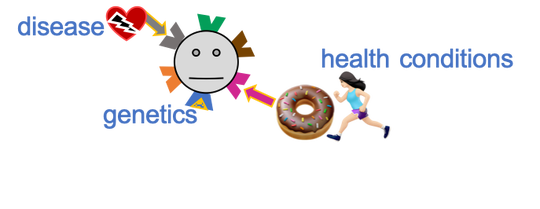
Chronic diseases like cancer and dementia do not happen all at once, but are the result of a lifetime of genetic and environmental influences. Our lab uses genetic and health records data to uncover these factors, in order to recommend relevant therapies.

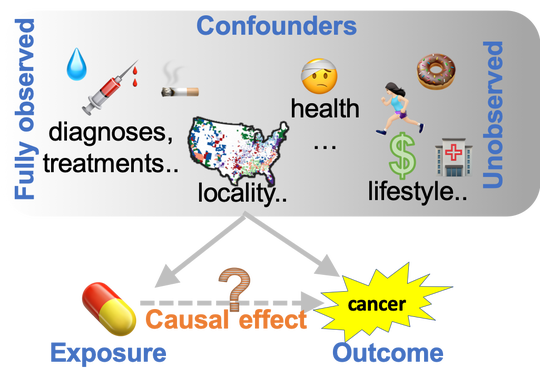
Health records data can tell us if individuals who take a drug later have different rates of disease. We systematically investigated the association of nearly 10,000 drug combinations with risk of any common cancer, discovering unexpected combinations of lipid-modifying drugs.

But health records are noisy and biased. We found that drug prescribing is influenced by confounding factors like wealth or geographic factors. These factors can all influence disease risk. As a result, health records are full of false associations between a drug and disease that have nothing to do with any effect of the drug on the disease biology. We are developing approaches to measure these biases and deep learning models of the health record to overcome them.

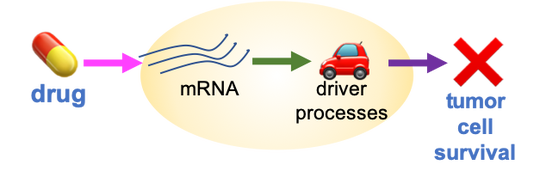
Health records are not the only source of data on possible drug relevance to disease. Our approach uses molecular data to propose biological mechanisms of drug effect on disease. For instance, verapamil, a calcium channel blocker, is investigated for type 1 diabetes, due to shared etiology of hypertension and type 1 diabetes. We develop novel analyses of genetics, common and rare risk factors, and in vitro assays to predict and explain drug effects.

Projects

A major goal of the lab is to learn influences of health history and drugs on disease development. Diseases can share common causes and deveolopment patterns, with implications for personalized disease risk forecasting and prevention. Repurposing common drugs has the potential to accelerate discovery of new disease treatments.

The natural history of cancers and dementias

We use large health records data to learn how drugs, diseases, and other types of expsosures could change risk of disease or change disease outcome. These studies complement our work using genomic data to understand these effects.

Leveraging the shared basis of diseases

Genetic diseases, lifestyle, and chronic diseases can impact the development of late-onset diseases like cancer and dementias. Using genomic data, we can learn about disease mechanisms contributing to the development of these diseases of later life.

Learning how drugs affect disease tissue

This project aims to use big experimental datasets to understand the effects of drugs on gene function in disease, and how these effects impact disease pathways.